Dead Ahead: Roadside
- 0.0
- Rating
- 100.00K
- Installs
- Free
- Price

 Analysis by App-foxy
I approached Dead Ahead: Roadside expecting a quick zombie-themed diversion, but its real appeal is more specific: it mixes pixel-art adventure, role-playing decisions, roguelike uncertainty, and idle-game pacing into a compact experience that rewards patience more than reflexes. I found it most enjoyable when I treated each run as a small experiment rather than a straight march toward victory. The game is free to start, developed by Mobirate, and aimed at Teen players, but its loop is better suited to people who enjoy gradually improving a plan than to anyone looking for a pure action game.
That distinction matters. This is not the kind of zombie game I would recommend simply because it has zombies. Its strongest moments come from deciding when to push forward, when to conserve resources, and when to accept that a promising attempt has gone badly. The pixel presentation gives it personality, while the roguelike structure keeps familiar encounters from feeling completely routine. At the same time, the idle elements can make progress feel less immediate, especially if you prefer every improvement to come directly from active play.
How the roadside adventure actually feels
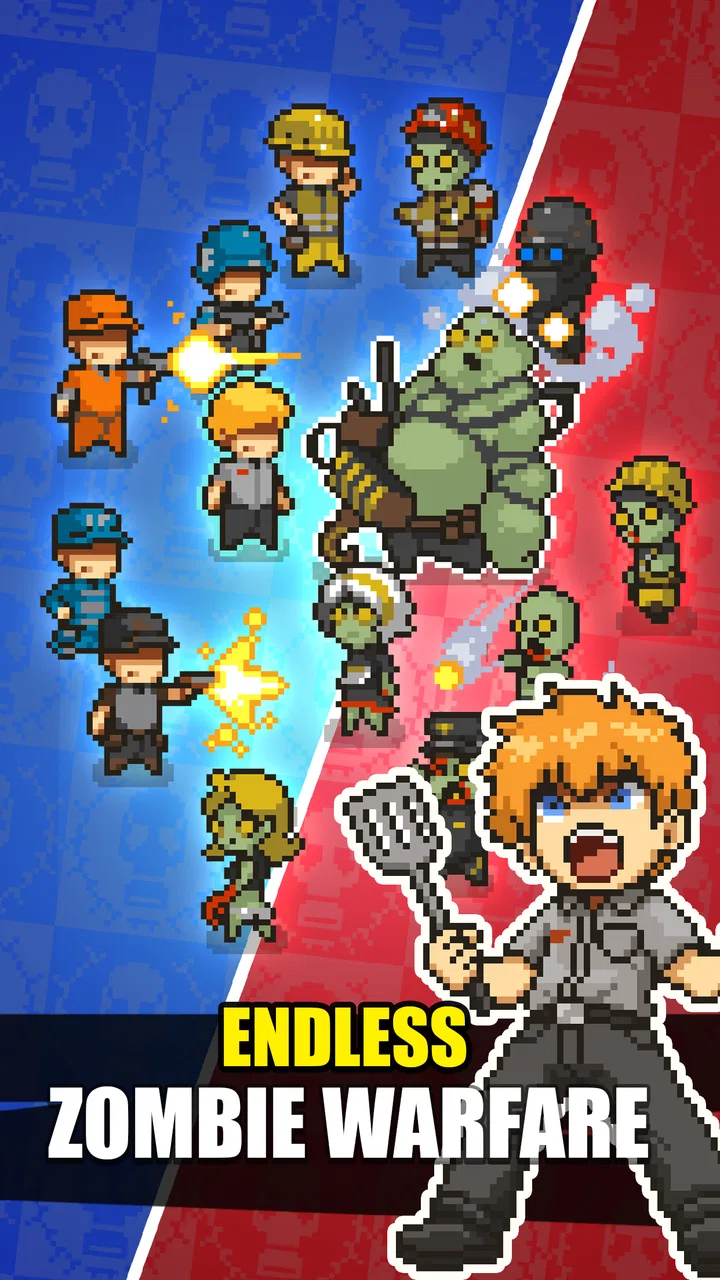
The setting does a lot of work with very little visual excess. The roadside, the ruined surroundings, and the pixel-art character designs create a scrappy atmosphere rather than a polished blockbuster version of the apocalypse. I liked that tone because it makes the game feel closer to a portable survival story than to a large-scale cinematic adventure. The screen is readable, the visual language is easy to understand, and the modest presentation helps the important decisions stand out.
You May Also Like

 AccuWeather: Weather Radar
AccuWeather Review: A Quick, Clear Forecast for Everyday Decisions
For everyday plans, the best forecast is the one you can understand quickly. AccuWeather makes rain timing, radar, and local conditions easy to act on, with a few trade-offs.

 Hill Climb Racing
Why Hill Climb Racing Still Turns Crashes Into One More Run
A tiny car, a bumpy hill and one more upgrade: Hill Climb Racing keeps resurfacing because its simple chaos makes every near-miss feel personal.

 AliExpress - Shopping App
AliExpress Makes Global Shopping Feel Personal, but Shoppers Bear the Risk
AliExpress turns a global marketplace into a pocket-sized discovery engine. Its reach is useful, its shopping loop compelling, and its trade-offs easy to miss.

 Lords Mobile: Kingdom Wars
Lords Mobile Is a Kingdom-Building Routine, Not a Quick Match
A case-by-case verdict on the building, battles, device demands, and social commitments that make Lords Mobile rewarding for some players and exhausting for others.

 PDF Scanner app - TapScanner
TapScanner Makes Paperwork Easier to Capture, Check, and Share
TapScanner makes scanning with a phone feel less like a rescue operation and more like a dependable step in getting work done. Its capture tools are useful, though not flawless.

 Block Blast!
 Shows How Much a Puzzle Game Can Leave Out
A quiet grid game shows why puzzle players increasingly value instant clarity, repeatable skill and low-pressure play—and where the genre still needs to catch up.
More From Our News Desk
View All News


In practice, I found myself switching between two mindsets. During an active stretch, I paid attention to what was happening in front of me and considered whether the current situation was still under control. During a quieter stretch, I thought more like a manager, weighing whether a small gain was worth the risk of continuing. That combination is where the game separates itself from a conventional arcade zombie title. You are not only reacting to danger; you are also learning how to make a run more sustainable.
The roguelike structure gives mistakes a useful purpose. A failed attempt does not feel valuable merely because it ended, but it can reveal a pattern: a risky choice that repeatedly drains momentum, an encounter that deserves more preparation, or a habit of spending too much too early. I recommend resisting the urge to judge the game after one unlucky run. Its design makes more sense once you begin comparing attempts and noticing which decisions consistently produce trouble.
One practical tip is to treat the opening portion of a run as reconnaissance. I was tempted at first to play aggressively whenever an opportunity appeared, yet that approach often left fewer options later. A cautious early phase gives you a better idea of the rhythm of the current attempt. It also helps you distinguish a genuinely strong run from one that only feels exciting because it began quickly. That is a small change in attitude, but it made my sessions more consistent.
The idle influence is also more meaningful than a simple background timer. It changes how I think about returning to the game. I do not need to stay focused on it every minute, which makes it suitable for short visits during a commute, while waiting for food, or between other tasks. However, the relaxed pacing can work against the tension. If you want constant pressure and immediate control, the pauses between meaningful decisions may feel like friction rather than breathing room.
Why the blend works better than the premise suggests
Zombie games often rely on familiar emotional shortcuts: gather equipment, defeat enemies, survive the next wave. Dead Ahead: Roadside gets more mileage from the uncertainty around those basics. The roguelike layer means I cannot assume that a comfortable approach will remain comfortable, while the role-playing influence encourages me to think about long-term improvement rather than only the next encounter.
I especially appreciated the way this changes the value of failure. In a straightforward action game, losing can feel like a demand to improve your timing. Here, losing may instead point to a poor sequence of choices. That makes the game friendlier to players who enjoy analysis but less satisfying for people who want their skill to be measured almost entirely through fast reactions.
The pixel-art style supports this design well. It keeps the action visually distinct without burying the screen in effects, and it gives the apocalyptic setting a slightly rough, playful identity. I would not describe the presentation as technically ambitious, but ambition is not the point. The visual style is functional, memorable, and consistent with the game’s compact scale.
Another non-obvious strength is how well the game fits fragmented attention without becoming completely mindless. I can make a little progress in a short session, put the phone away, and return later without needing to reconstruct a complicated story. Yet the best results still come from remembering what went wrong and adjusting the next attempt. That makes it a good companion game for people who want continuity without committing to a long uninterrupted sitting.
The limitation: patience is part of the price
My biggest reservation is the uneven relationship between active play and waiting. The game wants to offer the convenience of idle progress, but that convenience can soften the urgency that makes a roguelike exciting. There are moments when I wanted to make a meaningful decision immediately, only to feel that the current pace was asking me to wait or return later. Players who enjoy slow accumulation may see that as a benefit; players who want a tightly controlled adventure may see it as a brake.
The free-to-play structure adds another consideration. The game costs nothing to begin, but it includes in-app purchases ranging from $0.99 to $119.99 per item. That range is important to keep in mind before settling into the progression loop. I would approach the game with a fixed personal limit and avoid treating a difficult run as a reason to spend impulsively. The most satisfying part of the experience, in my view, is learning the system, so paying to remove every obstacle could reduce the very decision-making that makes it interesting.
This is also where the Teen content rating becomes relevant for families. I would not hand it to a younger child simply because it uses pixel graphics. The zombie-apocalypse setting gives the game a darker tone than its compact visuals might suggest. For a teenager, that combination may be perfectly appropriate depending on personal preferences, but parents should still consider whether the theme and purchase model fit their household rules.
Another point of friction is that the game may feel opaque if you expect every system to explain itself at once. I had better results when I experimented, observed consequences, and accepted that some knowledge would come from repeated play. That can be rewarding, but it is not ideal for someone who wants a fully transparent tutorial and a clearly signposted path from the first minute.
I also would not choose this as my first recommendation for a player seeking a story-heavy adventure. The roadside setting supplies atmosphere, but the main attraction is the repeatable gameplay loop. If your priority is dialogue, character drama, or a long scripted campaign, a narrative adventure would serve you better. Likewise, if you want direct, high-speed combat with little downtime, an action-focused zombie game is likely a stronger match.
Who will get the most from it
I think the best audience is someone who enjoys mobile games that can be played in layers. You can check in briefly, make a few decisions, and leave, or spend longer examining why a run succeeded or failed. Fans of roguelike games will recognize the appeal of learning through repetition, while players who normally avoid demanding action may appreciate that success is not based only on rapid tapping.
It also suits people who like a distinctive setting but do not need elaborate production values. The pixel-art approach is not merely decoration; it keeps the game lightweight in spirit and makes the roadside world easy to read. If you enjoy the idea of a zombie journey but prefer a stylized presentation to grim realism, this is a convincing fit.
A realistic everyday scenario would be a short evening session after work. I might begin a run while waiting for dinner, make conservative choices because I know I will not concentrate for long, and then return later to see whether the accumulated progress gives me a better starting position. On a weekend, I could instead play more deliberately, compare the outcome with an earlier attempt, and focus on improving one weak decision rather than chasing immediate rewards.
There is a useful trade-off here for commuters and casual players. The idle side makes the game forgiving when life interrupts you, but the roguelike side means you still benefit from remembering your previous mistakes. It is therefore more engaging than a purely passive idle title, yet less demanding than an adventure that expects uninterrupted attention. That middle ground is probably its clearest practical advantage.
I would be more cautious about recommending it to competitive players who need precise balance, instant feedback, or a strong sense of measurable mastery. The uncertainty and slower progression can feel less satisfying if you want every result to reflect a clean performance. I would also skip it if you dislike replaying similar situations to understand a system. Repetition is not a side effect here; it is central to how the game teaches you.
Before installing, I would check three personal preferences. First, am I comfortable with a game that sometimes asks me to wait rather than constantly act? Second, do I enjoy learning through failed attempts instead of receiving every answer immediately? Third, can I keep in-app spending separate from frustration? If the answer to all three is yes, the free entry point makes it easy to see whether the loop suits you without committing to a purchase.
What to expect on your device and over time
The game supports devices running Android 7.1 or later, which gives it a relatively accessible technical starting point for Android users. The current version is 0.6.1902. I would still keep the operating-system requirement in mind before planning to play on an older phone or tablet, especially if that device already struggles with newer games.
Its audience is still developing, with over 100 thousand installs, so I see it more as a focused game to try than as an automatic mainstream recommendation. That is not a criticism of the design. It simply means I would choose it because its particular blend appeals to me, not because a huge community has already made the decision for me.
In comparison with usual adventure alternatives, this game asks for less uninterrupted attention and offers more replay-oriented decision-making. Compared with idle games, it gives me more reason to stay mentally involved. Compared with traditional role-playing games, it appears more compact and less dependent on a long narrative commitment. Those comparisons explain both its charm and its limits: it occupies a narrow middle space, and people who want one pure genre may find the mixture slightly awkward.
One workflow that helped me was separating “progress sessions” from “learning sessions.” In a progress session, I played conservatively and tried to preserve a good run. In a learning session, I deliberately tested a riskier choice to understand its consequences, even if that attempt was unlikely to last. This prevented me from confusing experimentation with failure and made the roguelike structure feel more purposeful.
I also recommend judging upgrades and improvements by how they change your options, not only by how powerful they appear. A modest improvement that lets you respond to more situations can be more valuable than a flashy gain that only helps under ideal conditions. That way of thinking is especially useful in a game where uncertainty can punish a narrow strategy. It is one of the reasons I found the experience more thoughtful than its simple premise initially suggested.
After spending time with it, my view is clear: Dead Ahead: Roadside is at its best when you enjoy cautious experimentation, compact sessions, and gradual mastery. It is not a perfect fit for players who need nonstop action, a deep scripted story, or completely predictable progression. The idle pacing can dilute tension, and the purchase range means I would play with a budget in mind. Still, the combination of pixel-art atmosphere, zombie-apocalypse adventure, role-playing choices, and roguelike replayability gives it a recognizable identity.
I would recommend it to a friend who wants a mobile game that can sit between an active adventure and a relaxed idle experience. I would tell that friend to start free, play several attempts before judging the progression, and treat early runs as lessons rather than tests of worth. For the right player, that roadside journey becomes an enjoyable cycle of planning, adapting, and trying again. For everyone else, a faster action game or a more story-driven adventure will probably be the better choice.
Mobirate has created a game with a narrower appeal than its zombie theme might imply, but that focus is also its strength. It knows how to make a small run feel like a decision, a setback feel informative, and a short visit feel worthwhile. I would not call it essential for every mobile gamer, yet I would gladly keep it available for those moments when I want progress without pressure and strategy without a long commitment.
FAQs for Dead Ahead: Roadside
01What is Dead Ahead: Roadside about?
Dead Ahead: Roadside is a thrilling action-packed game where you navigate through post-apocalyptic landscapes filled with zombies. Your mission is to survive relentless zombie hordes while completing various challenges. The game combines strategic planning with fast-paced action, providing an engaging and immersive experience for players seeking a mix of strategy and survival.
02Is Dead Ahead: Roadside free to play?
Yes, Dead Ahead: Roadside is free to download and play on both Android and iOS platforms. However, it includes in-app purchases that allow players to acquire additional resources, power-ups, and customization options. While these purchases can enhance gameplay, they are not necessary to enjoy the full experience of the game.
03What are the device requirements for Dead Ahead: Roadside?
Dead Ahead: Roadside requires a device running at least Android 5.0 or iOS 10.0. The game is optimized for smooth performance on both platforms, but older devices might experience slower load times or reduced graphics quality. Ensure your device has sufficient storage and is updated to the latest software version for optimal gameplay.
04Does Dead Ahead: Roadside require an internet connection?
While Dead Ahead: Roadside can be played offline, some features such as updates, leaderboards, and certain in-app purchase options require an internet connection. Playing online enhances the experience by allowing access to community features and updates, but you can still enjoy the core game offline.
05Are there any tips for beginners in Dead Ahead: Roadside?
Beginners should focus on upgrading their vehicles and weapons as soon as possible to handle tougher zombie hordes. Prioritize completing missions to earn rewards and learn to manage resources carefully. Exploring different strategies for each level will help you progress more effectively, and remember to make use of the environment strategically to outsmart the undead.
Pros
- Engaging gameplay with strategic depth.
- Vibrant graphics and smooth animations.
- Frequent updates with new content.
- Intuitive controls for easy navigation.
- Offline play available for convenience.
Cons
- In-app purchases can be pricey.
- Ads can interrupt the gaming experience.
- Limited character customization options.
- Difficulty spikes may frustrate players.
- Requires substantial device storage space.

Dead Ahead: Roadside
Gallery